 Global (English)
 Malaysia (English)
 Argentina (Español)
 México (Español)
 België (English)
 Nederland (Nederlands)
 Brasil (Português)
 Norge (Norsk)
 Chile (English)
 Österreich (Deutsch)
 Česká republika (Czech)
 Polska (Polski)
 Danmark (Dansk)
 Suomi (Suomi)
 Deutschland (Deutsch)
 Sverige (Svenska)
 España (Español)
 Türkiye (English)
 Ελλάδα (Ελληνικά)
 United Kingdom & Ireland (English)
 France (Français)
 United States & Canada (English)
 India (English)
 Україна (Українська)
 Italia (Italiano)
 Other Countries (English)






























Salone del Mobile 2026: The Evolution and Applications of Glass in Interior Design
Current trends confirm the central role of glass in contemporary design, from coloured glass to decorative finishes and extra-clear glass.
The recently concluded edition of the Salone del Mobile in Milan reinforced its global standing with impressive figures: over 1,900 exhibitors from 32 countries and more than 316,000 visitors from 167 nations. This reaffirmed the event's position as the leading international platform for the design and furniture industries. It is here that glass confirms its status as a key material in contemporary interior design thanks to its irreplaceable versatility.
One of the most evident trends is the widespread use of body-tinted glass, particularly in grey and bronze shades, which are increasingly featured in contemporary interior design solutions. Grey shades are widely used in the Pilkington Optifloat™ Grey range and the darker variants of the Pilkington SuperGrey™ range. These are primarily used for worktops, tables, coffee tables and furniture elements, as well as decorative surfaces in residential and other settings. These solutions create distinctive surfaces that enhance spaces by modulating light and perception of depth.
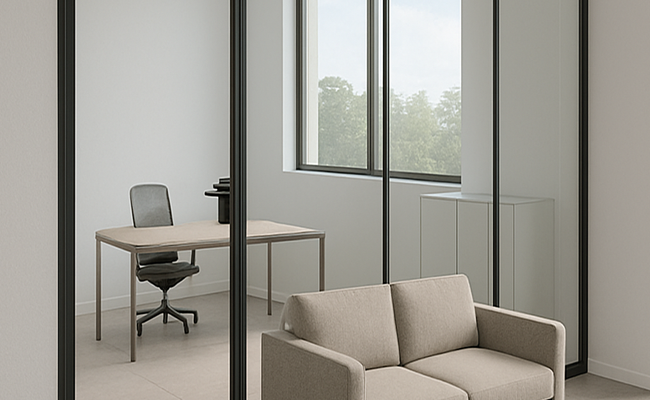
Similarly, bronze-tinted glass, such as Pilkington Optifloat™ Bronze, is being used more and more in the creation of tables and coffee tables, as well as interior accessories. It helps to create sophisticated, contemporary atmospheres through its warm reflections and interplay of light and shadow. Its use in decorative panels and interior partitions is also becoming more common, where the glass becomes a defining feature of the space.
Alongside coloured glass, decorative and textural treatments such as thermal fusion are also becoming more popular, being used for feature panels, bespoke furniture and surfaces in refined, contemporary spaces. These solutions enhance the expressive potential of glass, transforming it into a narrative element in interior design.
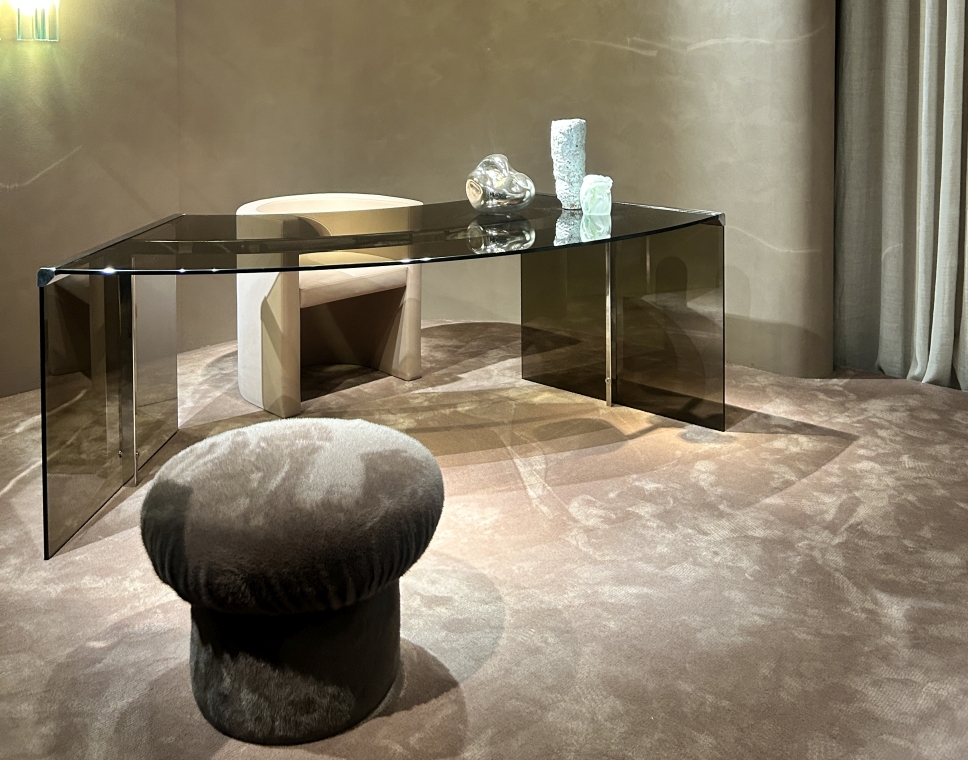
Great attention is also paid to extra-clear glass intended for high-end projects, such as Pilkington Superwhite™, as well as to surface finishes, such as satin and digital printing. Thanks to its exceptional visual purity, high colour neutrality, and brilliance that remains evident even in thick sheets, Pilkington Superwhite™ is an ideal solution for high-end decorative and design applications where transparency, colour fidelity, and aesthetic quality are central to the project.
Furthermore, combining these solutions with processes such as digital printing and satin finishing enables the creation of aesthetically pleasing surfaces with precise graphic detail reproduction and controlled privacy solutions in satin-finished applications.
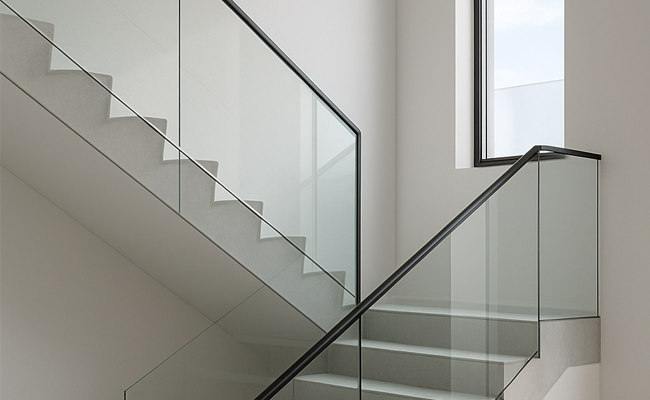
Pilkington Optiwhite™ remains widely used alongside these solutions and is a well-established benchmark for applications where visual lightness, transparency and natural light transmission are fundamental requirements. Its colour neutrality makes it particularly popular in contemporary interiors and transparent surfaces, as well as in design applications where glass is used to accentuate materials, colours and brightness.
Overall, Salone del Mobile 2026 showcases the ongoing evolution of glass from a functional material to a central design element capable of influencing the aesthetic identity of spaces and interacting with light, colour and materials.
Glass solutions are essential for meeting the evolving demands of contemporary design, which is increasingly oriented towards visual lightness, personalisation, and perceived quality.

