 Global (English)
 Malaysia (English)
 Argentina (Español)
 México (Español)
 België (English)
 Nederland (Nederlands)
 Brasil (Português)
 Norge (Norsk)
 Chile (English)
 Österreich (Deutsch)
 Česká republika (Czech)
 Polska (Polski)
 Danmark (Dansk)
 Suomi (Suomi)
 Deutschland (Deutsch)
 Sverige (Svenska)
 España (Español)
 Türkiye (English)
 Ελλάδα (Ελληνικά)
 United Kingdom & Ireland (English)
 France (Français)
 United States & Canada (English)
 India (English)
 Україна (Українська)
 Italia (Italiano)
 Other Countries (English)



































How it works
Glass manages solar heat radiation by three mechanisms: reflectance, transmittance and absorptance.
These are defined as follows:
- Reflectance – the proportion of solar radiation reflected back into the atmosphere
- Direct transmittance – the proportion of solar radiation transmitted directly through the glass
- Absorptance – the proportion of solar radiation absorbed by the glass.
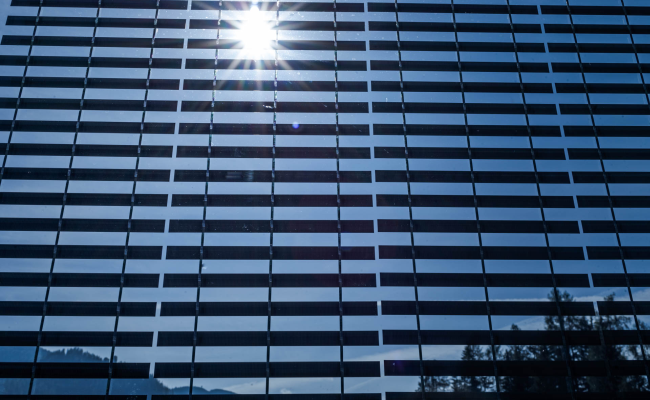
In hot conditions or for building with high internal loads, solar control glass is used to minimise solar heat gain. It allows sunlight to pass through a window or façade while radiating and reflecting away a large degree of the sun's heat.
In more temperate conditions, it can be used to balance solar control with high levels of natural light.
Our Range
Our innovative solar control products cover the whole range
We are continually innovating and developing products that satisfy the full range of architectural requirements. Over the years we have developed a wide range of energy management solutions for large and small glazed areas on all types of building.
Our solar control products cover the whole range:
- from the highest performing, off-line coated, solar control and low-emissivity products within the Pilkington Suncool™ range,
- through on-line environmental control glasses that combine good performance solar control with low-emissivity such as Pilkington Eclipse Advantage™ and Pilkington Solar-E™,
- to medium performance reflective glasses such as Pilkington Eclipse™ Gold, Pilkington SunShade™ Silver, Pilkington Reflite™ and High Performance Tints such as Pilkington Arctic Blue™,
- to low-performance, body-tinted glass in the Pilkington Optifloat™ Tint range,
- and even to solar control glass combined with the revolutionary self-cleaning Pilkington Activ™.
In addition to the above ranges, our solar control products can be used with many other Pilkington glass solutions, to achieve countless benefits in terms of safety, functionality and cost-efficiency.